
Leaky gut – how intestinal permeability develops and what helps holistically

Many chronic or recurring complaints cannot be clearly assigned to a single organ. Exhaustion, diffuse inflammation, skin problems, intolerances or increased stress intolerance often have a common basis: a disturbed intestinal barrier.
The term leaky gut describes an increased permeability of the intestinal mucosa – a central concept of functional medicine in order to understand the causes of systemic complaints.
What does “leaky gut” mean in medical terms?
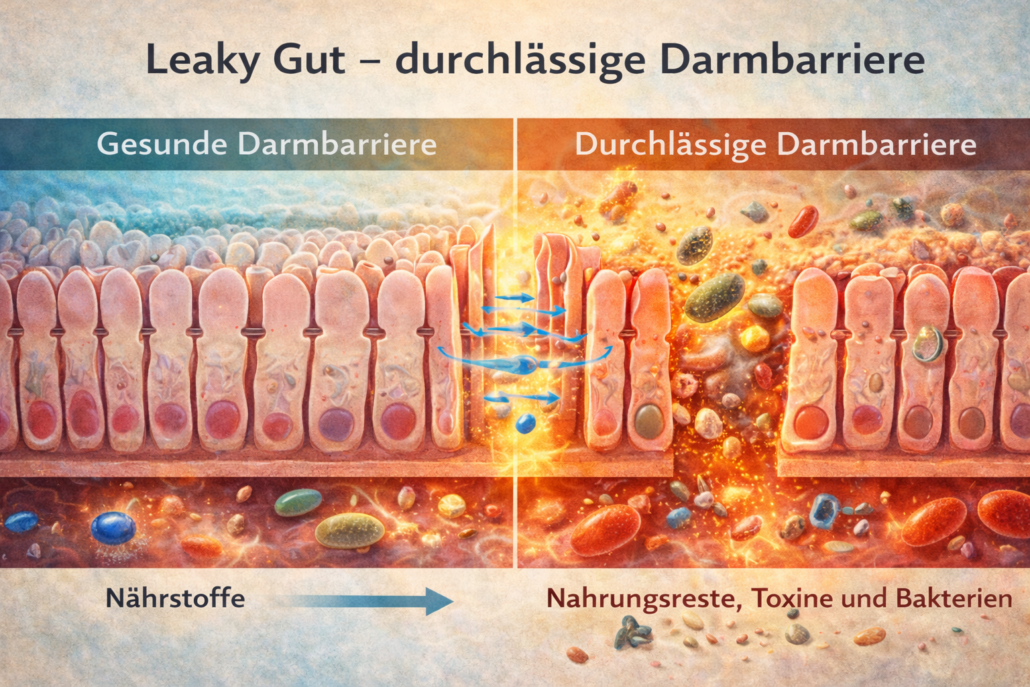
The intestinal mucosa fulfills a highly complex protective function. It allows the absorption of vital nutrients and at the same time prevents unwanted substances from entering the body.
In a leaky gut, this barrier function is disrupted. As a result, components from the intestinal contents – such as bacterial fragments or undigested food components – can come into increased contact with the immune system. This can promote silent inflammatory processes and trigger symptoms far away from the intestine.
Typical causes and triggers of a disturbed intestinal barrier
Leaky gut is usually multifactorial. Several stresses often act simultaneously:
- Chronic stress and autonomic dysregulation
- Dysbiosis (imbalance of the microbiome)
- Exposure to medication (e.g. painkillers, antibiotics – varies from person to person)
- Nutritional factors that promote inflammation
- Nutrient deficiencies that impair mucosal regeneration
Possible consequences of a leaky gut for the entire body
If the intestinal barrier becomes permeable, this can have an impact on numerous regulatory systems:
- Chronic inflammatory tendency
- Activation or intensification of autoimmune processes
- Food intolerances
- Exhaustion and reduced resilience
- Impairment of stress and emotion regulation
A holistic view: Why the gut should never be viewed in isolation
The intestinal barrier interacts closely with the nervous system, the immune system and the hormone balance. Chronic stress can increase the permeability of the mucous membrane – at the same time, a disturbed intestinal barrier increases susceptibility to stress.
In functional medicine, leaky gut is therefore not an isolated intestinal problem, but part of a systemic dysregulation.
Interim conclusion
Leaky gut is a functional disorder pattern with far-reaching consequences. Sustainable treatment of chronic complaints is often only possible if the intestinal barrier is specifically stabilized and embedded in a holistic treatment concept.
Frequently asked questions from practice
Can you see a leaky gut in a colonoscopy?
Usually no. A classic colonoscopy primarily assesses structural changes in the mucosa. Functional disorders of the intestinal barrier may exist even though the mucosa appears unremarkable endoscopically.
Can a leaky gut cause symptoms outside the intestine?
Yes, a disturbed intestinal barrier can promote systemic symptoms such as fatigue, skin problems, joint complaints or stress intolerance via immunological and inflammatory signaling pathways.
How can a leaky gut be diagnosed?
The diagnosis is made on the basis of the clinic, as well as specific intestinal mucosa parameters in the blood(zonulin and IFABT) and in the intestinal microbiome.
Is a leaky gut reversible?
In many cases, yes. Targeted, individualized support of the intestinal barrier and the underlying regulatory systems can significantly improve the function of the mucous membrane.
Holistic health support in my practice
A stable intestinal barrier is a key prerequisite for immune balance, energy and stress resilience. In my practice, I help you to identify functional causes and treat them in a targeted manner.