
Chronic stress – when the nervous system controls health

Many patients suffer from exhaustion, sleep disorders, digestive problems or hormonal complaints without a clear cause being found in conventional diagnostics. The common denominator is often a permanent malfunction of the nervous system.
Chronic stress not only has a psychological effect, but also alters fundamental biological regulatory processes in the body.
What is medically understood by chronic stress
Stress is initially a sensible adaptation reaction of the body. It enables performance and survival in the short term. Stress becomes problematic when the activation remains permanent and there is no longer a sufficient recovery phase.
The body then remains predominantly in the so-called:
- Alarm and power mode
- increased stress hormone levels
- Reduced regeneration
This permanent activation is controlled by the nervous system – usually unconsciously.
The autonomic nervous system as a central control center
The autonomic nervous system regulates almost all involuntary bodily functions. It consists of two main parts:
- Sympathetic nervous system: activation, performance, stress response
- Parasympathetic nervous system: regeneration, digestion, healing
In the case of chronic stress, this balance shifts in favor of permanent activation.
How chronic stress affects the body systemically
Persistent stress does not have an isolated effect, but influences several body systems simultaneously.
| System | Stress-related change | Possible symptoms |
|---|---|---|
| Digestion | Reduced blood circulation, reduced enzyme activity | Flatulence, irritable bowel syndrome, intolerances |
| Immune system | Dysregulation of inflammatory processes | Susceptibility to infections, silent inflammation |
| Hormone axes | Altered cortisol and thyroid regulation | Exhaustion, weight gain, cycle disorders |
| Energy balance | Reduced mitochondrial efficiency | Fatigue, loss of performance, brain fog |
Why stress is often underestimated
Many sufferers do not perceive their condition as exceptionally stressful. The nervous system can adapt to constant stress so that the condition is subjectively perceived as “normal”.
However, the body itself does not differentiate between occupational, emotional or internal stress – it reacts to the duration of the stress.
Interim conclusion
Chronic stress is not a lifestyle problem, but a key medical factor. If the nervous system is not included in the diagnosis and therapy, many complaints persist despite treatment.
Frequently asked questions from practice
Can stress actually cause physical illness?
Yes, chronic stress affects the autonomic nervous system, hormonal control circuits, the immune system and the metabolism and can therefore trigger or intensify physical complaints.
Why do I often not consciously feel stress?
The nervous system can adapt to constant stress. The condition is then subjectively perceived as normal, although the body remains permanently in activation mode.
How can stress dysregulation be medically diagnosed?
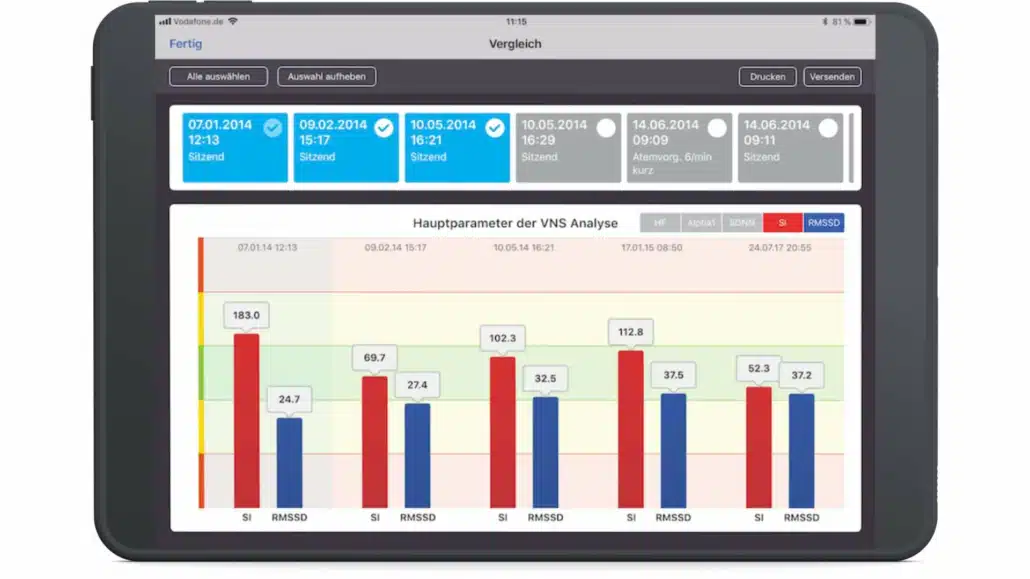
In addition to a detailed medical history, functional diagnostics can provide indications of dysregulation of the autonomic nervous system and the stress axes. In my practice, I offer the VNS analysis, which can objectify stress very well.
Holistic health support in my practice
Health comes from stable inner regulation. In my practice, I support you in recognizing stress-related imbalances, stabilizing your nervous system and building long-term resilience.