
Why infusions can be helpful – and when restraint makes sense
Functional medicine deliberately adopts a differentiated position here: Infusions are neither miracle cures nor superfluous – their benefits depend crucially on the individual context.

What infusion therapy can basically do
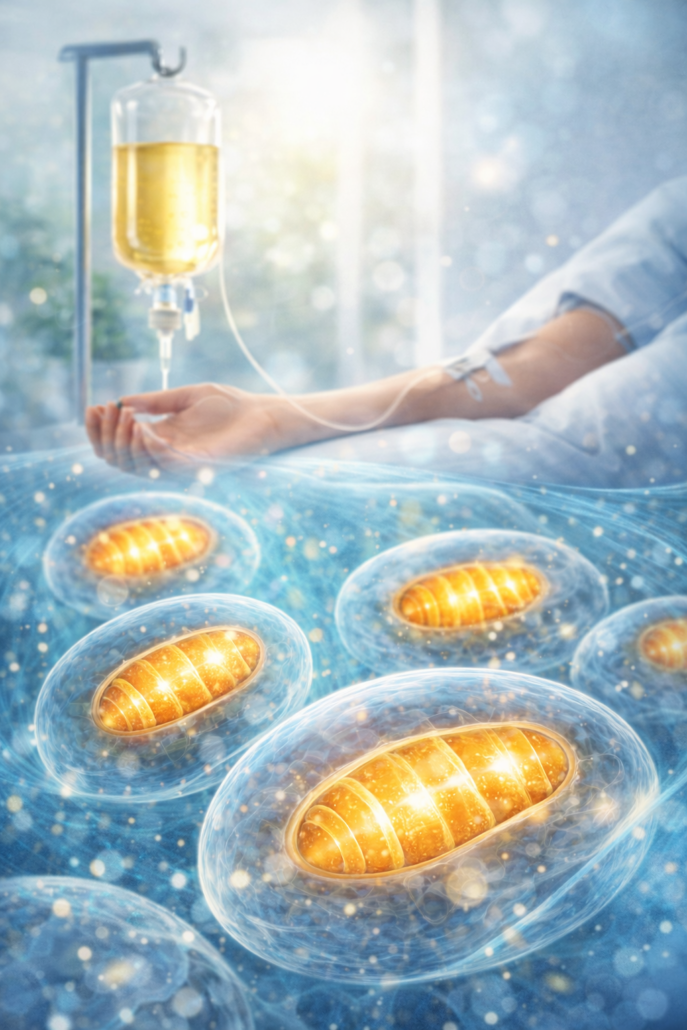
Infusions enable the direct supply of micronutrients via the bloodstream. This bypasses digestion, absorption and individual uptake disorders.
Possible advantages:
- High bioavailability
- Faster onset of action
- Relieving the bowel
- Targeted support for increased needs
This can be particularly useful for functional disorders at cellular level – such as mitochondrial exhaustion.
The critical view: When infusions are not the solution
As helpful as infusions can be, they are no substitute for root cause medicine. Without a clear indication, there is a risk of merely masking symptoms.
Infusions in particular should be evaluated critically:
- in the absence of diagnostics
- as sole therapy without regulation of sleep, stress and nutrition
- with a short-term “push” without a sustainable concept
Infusions have a supporting effect – not a repairing one, if central regulatory systems are still under strain.

When infusions can be functionally useful
In functional medicine, infusions are used in a targeted manner – as part of an overall concept.
| Situation | Possible benefit | Goal |
|---|---|---|
| Chronic exhaustion | Support for mitochondrial energy production | Improvement of resilience |
| After infections or inflammation | Replenishment of depleted micronutrients | Regeneration |
| Absorption disorders | Bypassing the intestine | Stable supply |
| High stress load | Reduction of oxidative stress | Systemic stabilization |
Who infusions can be particularly suitable for
Infusion therapy can be useful for people who:
- suffer from persistent exhaustion
- do not regenerate after infections or long periods of stress
- have demonstrable micronutrient deficiencies
- show impaired mitochondrial function
The decisive factor here is always an individual medical assessment.
Interim conclusion
Infusions are no substitute for causal medicine – but they are a valuable tool. Used correctly, they can provide targeted support for regulation, regeneration and cellular energy. Used uncritically, they remain ineffective or short-lived.
Infusion therapy in my practice
In my practice, I use infusions in a targeted and indication-based manner – embedded in an overall functional medical concept.